
Paulding County Civil Docket Searches
Court level comes first. General civil and domestic-relations cases in Paulding County Common Pleas run through the Paulding eServices search. Limited civil and small-claims matters belong to the Paulding County Municipal Court's CaseLook Record Search. Civil and Small Claims appear there as documented categories. Paulding County Probate cases, including estates and guardianships, take a separate Probate CaseLook route. Ohio offers no single statewide portal that replaces these Paulding County searches.
Stick to what the Paulding County public forms support. eServices searches a person by last and first name. It then narrows things by case type, status, party type, and dates. CaseLook works one field at a time. It accepts a name or company, a numeric case number, a hearing date, a file date, or case-type boxes. A web result tells you a Paulding County civil docket exists. It does not prove that document images, every party detail, or a final order are available online.
- Choose Paulding County Common Pleas, Paulding County Municipal Court, or Paulding County Probate before entering a name or number.
- Use the relevant Paulding County public search and select the documented Civil, Small Claims, Divorce, Dissolution, or other applicable category.
- Compare the party named in the Paulding County case, its case type, and dates with the matter being located.
- Read the newest Paulding County dated entry before relying on a scheduled event or case status.
- Ask the owning Paulding County clerk for a filed document, certified judgment, or verified record when needed.
Note: Access is court-specific in Paulding County. A no-result search in one court does not mean the civil case is missing from every civil lane.
Paulding County Civil Docket Routing
Get the routing right. That comes before any Paulding County civil docket search begins. Paulding County's structure gives Common Pleas exclusive original civil jurisdiction above $15,000. The Ohio county-court statute governs Paulding County too. It puts limited civil matters in the lower-court lane. The Municipal Court itself claims civil, small-claims, and eviction jurisdiction. A dollar figure is not a full jurisdiction opinion. It simply keeps a searcher from starting every Paulding County civil case in Common Pleas.
| Paulding County civil lane | Matters supported by official sources | Record route |
|---|---|---|
| Paulding County Common Pleas General and Domestic Relations | General civil above the lower-court ceiling; divorce, dissolution, legal separation, and related domestic cases | Paulding County Legal Division and Paulding eServices |
| Paulding County Municipal Court civil and small claims | Civil claims up to $15,000, small claims up to $6,000, and evictions | Paulding County Municipal Court Clerk and CaseLook |
| Paulding County Probate Division | Estates, guardianships, marriage, trusteeship, and related probate matters | Paulding County Probate clerk and separate CaseLook |
The official Ohio county-court civil statutes applicable in Paulding County lay out the $15,000 line, how a counterclaim above it gets transferred, and the lower-court lane. A case can stay public even when a different Paulding County clerk keeps it.
The Ohio county-court civil-limit statute is the primary source for that published routing boundary.
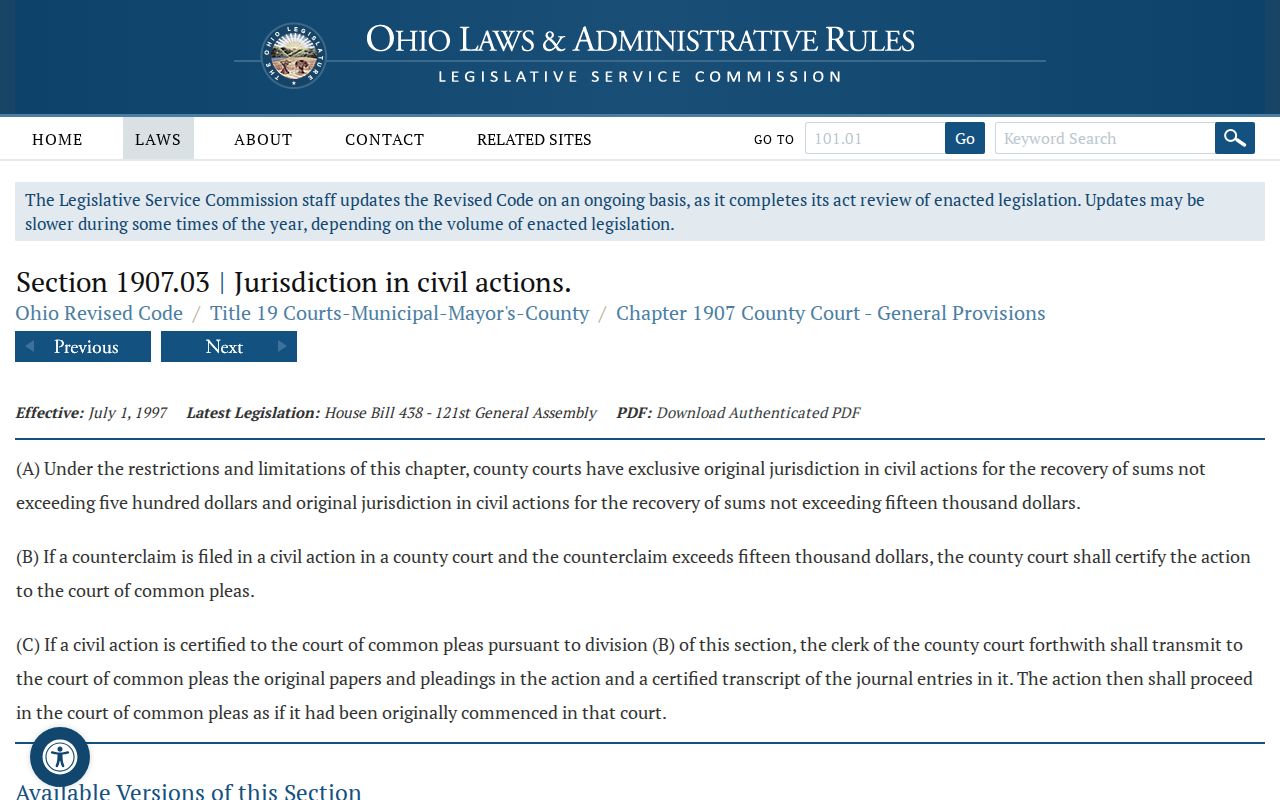
The statutory boundary is a practical clue, not a substitute for the court's own jurisdiction decision.
The Ohio county-court jurisdiction law spells out the separate lower-court lane that applies in Paulding County.
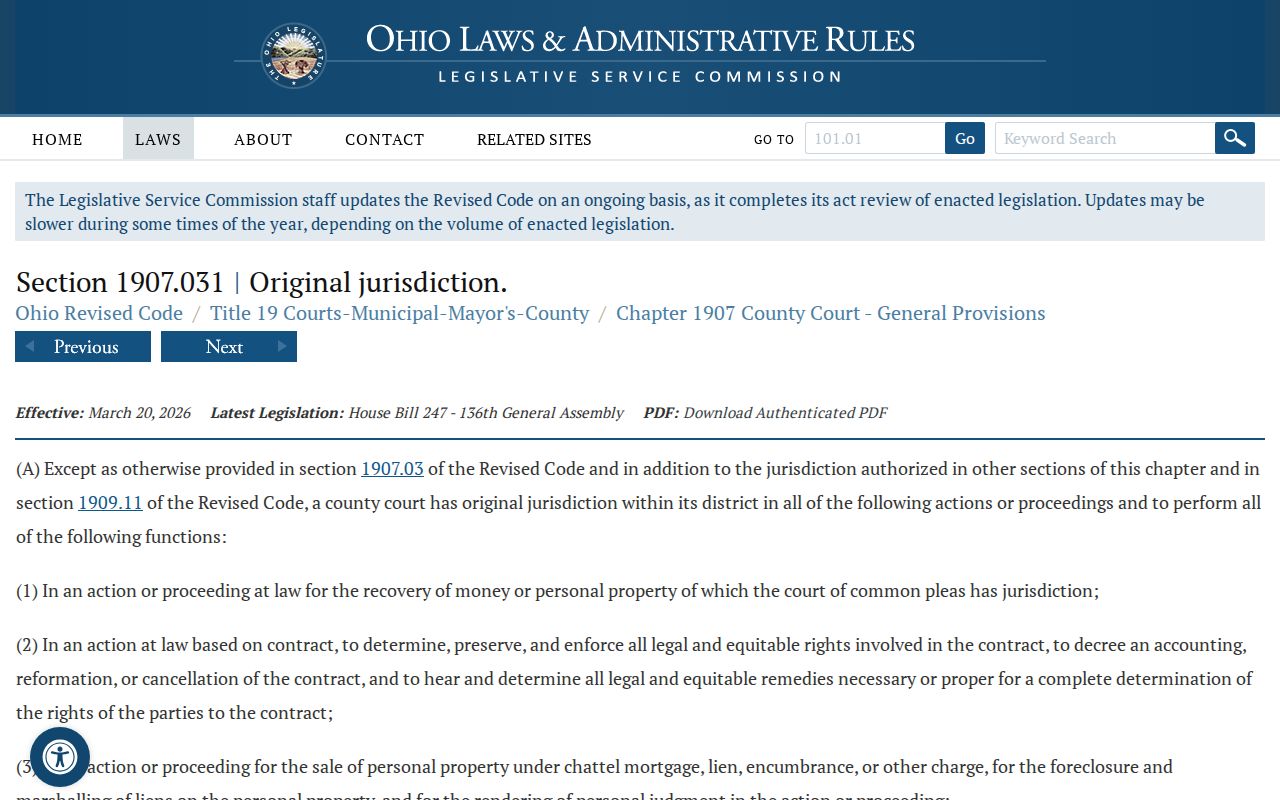
That jurisdiction source explains why Paulding County civil records are split among court-specific dockets and clerks.
Civil Dockets: What They Show
A Paulding County civil docket is chronological. It is not a promise that every case document downloads. Read it in a practical order. Case number and case type come first. Parties and counsel follow, then dated filings, settings, orders, and disposition. Paulding County Common Pleas Rule 27 sketches the sequence after a responsive pleading. Expect a Civil Rule 26(F) conference report and a scheduling conference. Paulding County dates follow for amendments, discovery, experts, dispositive motions, trial, final pretrial, and proposed jury instructions.
| Case number and type | The Paulding County court's identifier and category. Paulding County eServices lists Civil, Divorce, Dissolution, Certificate of Judgment, and related visible choices. |
|---|---|
| Parties | The caption in a Paulding County civil case identifies sides of the matter, often plaintiff or petitioner and defendant or respondent. |
| Filings | A Paulding County complaint or petition starts many cases; a responsive pleading begins the Rule 27 scheduling sequence. |
| Settings and orders | Scheduled conferences in a Paulding County civil case, motion deadlines, trial dates, and court rulings appear by dated action when entered. |
| Disposition | A Paulding County judgment, agreed resolution, dismissal, or default has the meaning stated in the actual entry or order. |
Paulding County publishes no anonymized civil register, result-column list, document-image rule, parties-and-counsel display, or civil disposition-code legend. A "Closed" status filter is not the final order. Read the actual docket action. Then turn to the clerk when an order or certified copy is required.
The R.C. 2303.901 document-access source sets out online-access limits. It also covers sensitive personal-information protections for Paulding County Common Pleas case documents.
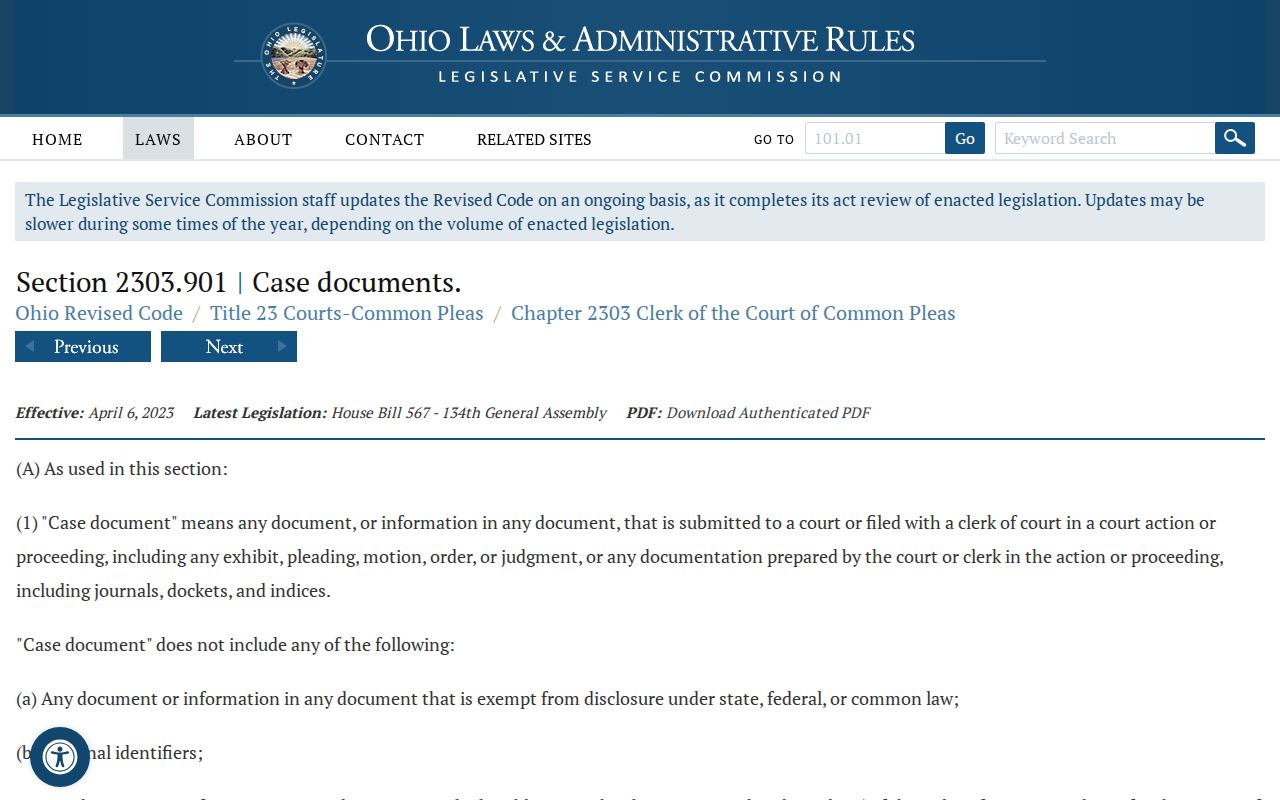
That Ohio document-access statute is the state rule behind the gap between a public Paulding County civil docket and the documents held in the court file.
Paulding County Civil eServices Searches
Paulding eServices is the public Common Pleas layer for a Paulding County civil docket. The Name route asks for last name, first name, middle name, suffix, and company name. Date controls are there too. Case type, case status, and party type round out the options. The public screen marks last and first name required. That rule applies to the individual route. The Case Type route is simpler. It wants a begin date, an end date, and a case type. These form details help a person shape a civil lookup. But do not assume every returned case has images or a uniform set of results.
| eServices search route | Documented fields | Useful civil detail |
|---|---|---|
| Name | Last, first, middle, suffix, company, case type, status, party type, dates | Last and first name are required for an individual search. |
| Case Type | Begin date, end date, case type, city/town, status, party type | Begin date, end date, and case type are marked required. |
| Case Number | Case number | Required free-text number. |
| Advanced Case Number | Four-digit year, case type, number | All are required; the number field permits up to ten digits. |
Visible Common Pleas case-type choices include Civil, Divorce, Dissolution, Certificate of Judgment, and tax/lien import. The site selector lists All Sites and Common Pleas. So do not expect a Municipal Court small-claims case or a Probate case in the same Paulding County civil docket search.
What Cases Fill the Civil Docket
Civil matters in Paulding County split across three courts. Knowing which one holds your case saves time. Common Pleas handles the bigger civil disputes through its General and Domestic Relations divisions. Divorce, dissolution, legal separation, and post-decree matters land there too. Municipal Court takes the smaller stuff: limited civil claims, small claims, and evictions. Probate stands apart entirely. It covers estates, guardianships, marriage licenses, trusteeships, and related questions. So the label "civil court records" is broad. Each Paulding County category still answers to its own record keeper.
- Paulding County Common Pleas general civil matters above the lower-court jurisdictional ceiling.
- Paulding County Common Pleas domestic cases, including divorce, dissolution, legal separation, and post-decree matters.
- Paulding County Municipal civil claims within the published $15,000 limit.
- Paulding County Municipal small claims within the published $6,000 limit.
- Paulding County Municipal eviction proceedings and Paulding County Probate Division matters through their separate channels.
The Municipal Court's bonds, waivers, and costs page sorts its civil filing fees into small claims, forcible entry and detainer, garnishment, and appeals. Seeing a fee listed tells you the procedure exists. It does not tell you how a case ended. A charge on a Paulding County civil docket is a request, never a result.
The Municipal Court fee schedule publishes those lower-court civil cost categories. The court printed the date on the schedule.
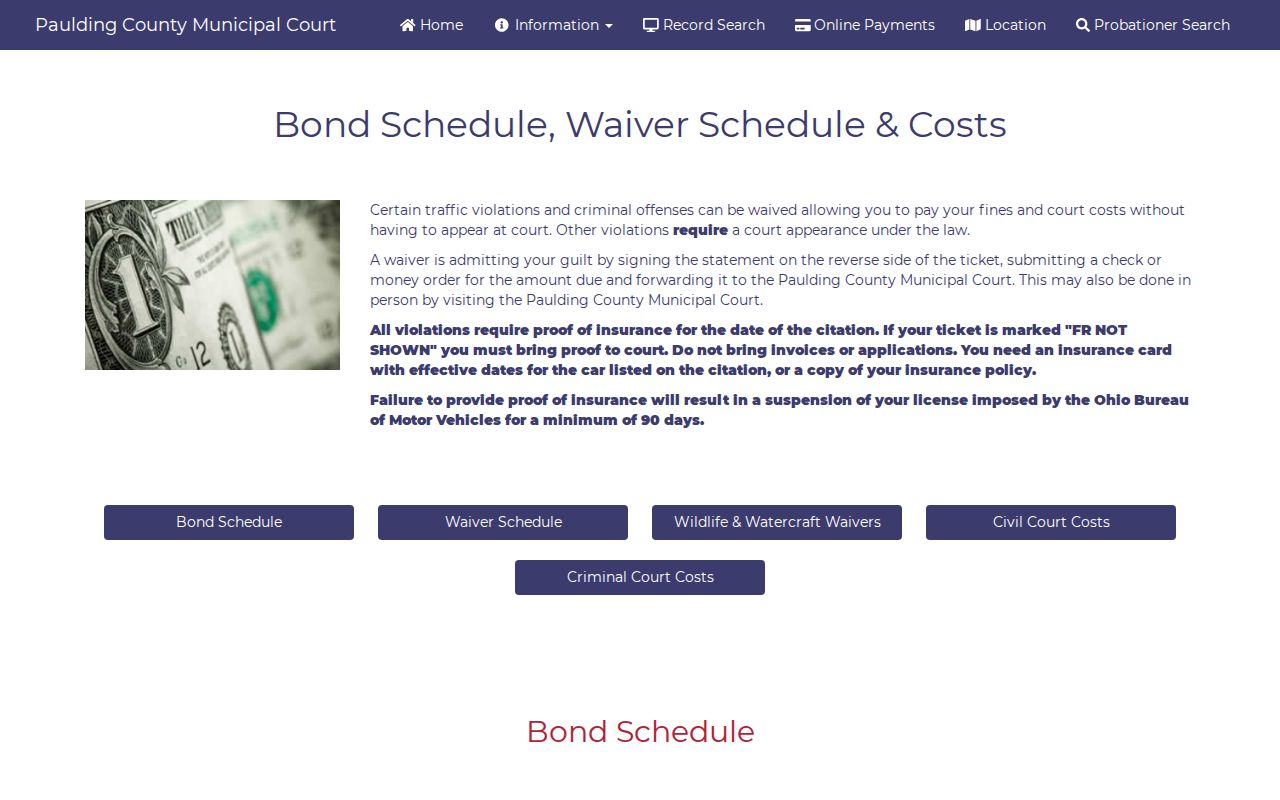
That Municipal schedule carries an effective date of November 1, 2016. Confirm the current amount with the court before you pay anything.
Paulding County Civil Scheduling Orders
Once an answer or other responsive pleading lands in a Common Pleas civil case, the scheduling order takes over the Paulding County civil docket. Rule 27 links the timeline to a Civil Rule 26(F) conference report. It even allows a scheduling conference by telephone. The order can fix deadlines for parties and amendments. It also covers discovery, experts, dispositive motions, trial, final pretrial, and proposed jury instructions. Because those dates are journalized, they carry real weight. An informal guess about when a case might be heard means far less.
A few terms help here. A dispositive motion is a written request that can resolve all or part of a case. Discovery is the exchange and investigation stage of litigation. A final pretrial is a later court conference held before trial. With those definitions in hand, it makes sense that a Paulding County civil docket lists several deadlines before any final judgment arrives. One caution applies. A later entry can modify an earlier date. The newest dated court action controls until the clerk or the court says otherwise.
Common Pleas Rule 13 also lets the court hold pretrial or status conferences in person, by telephone, or by Zoom, at its election. That rule governs the form an event takes. It promises nothing about whether the general public can view every event online.
Hearings on the Civil Docket
Trust the docket for a Paulding County civil hearing. Trust the court that owns the case over anything else. The Common Pleas eServices Calendar opens with a list view plus filters for Today, Judge, Location, Event Type, an Include Resulted Events checkbox, and Apply Filters. Its default view shows configured events for all judges and locations on the current date. An underlined date means an event count sits behind it. The court decides what event details it publishes. Some events stay hidden unless the viewer is a party or connected to one.
Municipal Court works differently. When you want a civil or small-claims date, CaseLook's Calendar Search beats a name query. You must enter a Beginning Date. Then come the Ending Date, case-type boxes, results-per-page choices, and a CAPTCHA. The interface offers no judge, courtroom, attorney, or case-number filters. A blank calendar there proves nothing about whether a Paulding County civil hearing exists.
When the date truly matters, run this chain. Find it online. Compare it against the most recent case action. Then call Common Pleas at 419-399-8220 or Municipal Court at 419-399-5370. That sequence catches changes, continuances, and calendar details the court keeps off the public view.
Paulding County Civil File Custody
A Paulding County civil docket entry and the document it points to are two separate things. The Paulding County Clerk of Courts, Legal Division, keeps the Common Pleas civil and domestic case files. Reach that office in Room 104. Call 419-399-8210, or email clerk@pauldingcountyoh.com. Costs come from the published Common Pleas schedule: $2 per document plus copy charge for certification, and $2 per page for a complete record. The schedule lists no ordinary copy rate, no online request form, and no delivery-time rule. It also does not say that eServices provides document images.
The clerk's statute spells out this duty. The clerk of a Common Pleas court must keep the case files. The clerk must also maintain a general docket for the court.
Municipal Court civil and small-claims records follow their own path. Use CaseLook to locate the record first, then send a request to the Municipal Court Clerk or file its Public Records Request form. Inspection costs nothing under the form. The first 24 copies are free. Copies 25 and above run $0.50 each. Certified copies cost $2 per document, and mail requests require advance payment of actual cost. Probate keeps a separate clerk and its own fee page. Do not merge Probate fees with either civil clerk's practice.
Need a certified judgment? Go to the clerk that owns the case. An uncertified portal lookup never becomes a certified record just because it displays a case. After a final order, an appeal record also runs through the Legal Division, whose official responsibilities include records for the Ohio Third District Court of Appeals, the court serving Paulding County.
Who Can See Civil Dockets
Ohio court records start open to the public. The current Rules of Superintendence guarantee that access. The same rules restrict protected identifiers and sensitive material. So a Paulding County civil docket may be public while parts of its filings stay off limits. Tools like eServices and Case Look only locate cases. For a true copy, you inspect or request the record through the proper court during regular business hours. Even then, the court can withhold a document or detail online that it would show at the counter. A good written request names the docket, judgment, or filing you want. Add the court and case number when you have them.
Key Ohio civil-record authorities:
Ohio Sup.R. 11.09–11.14 provides the current access, prompt-response, personal-identifier, and restriction framework for court records.
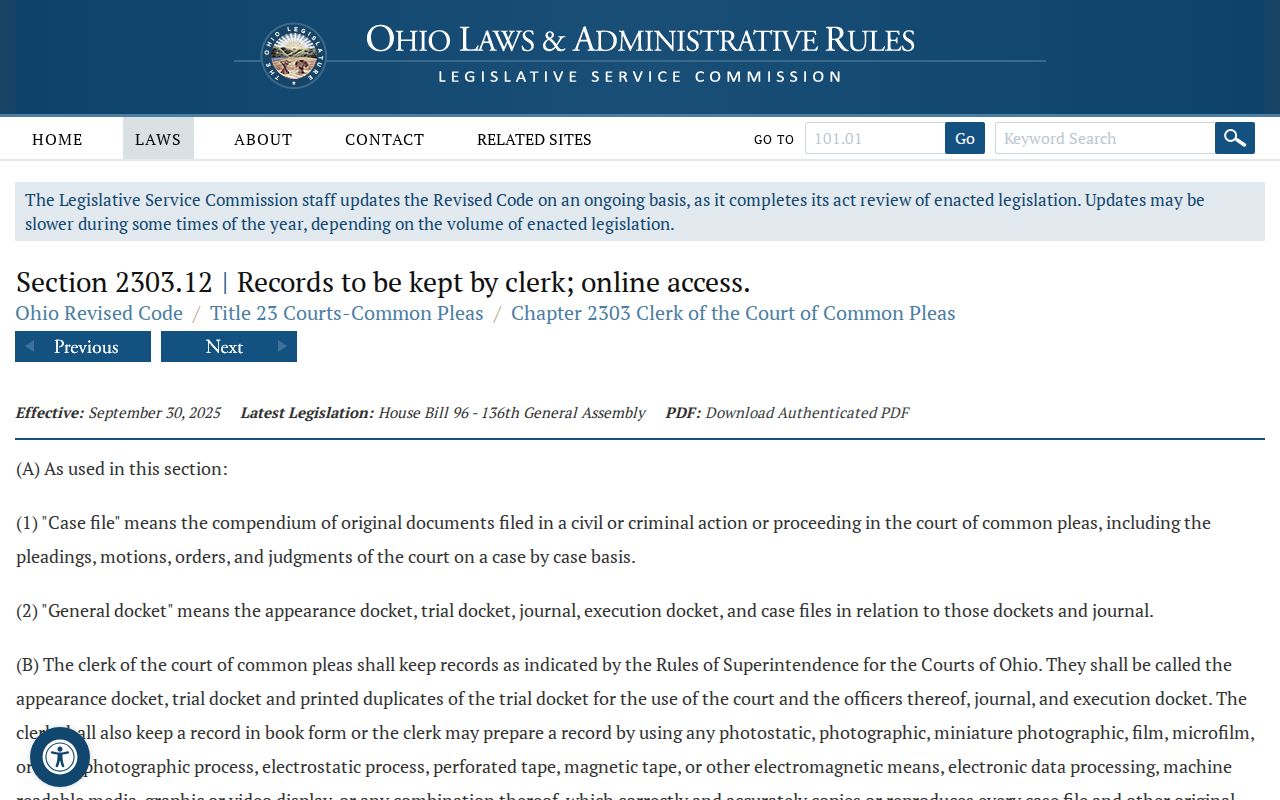
R.C. 2303.12 requires a Common Pleas clerk to keep case files and a general docket, with remote-access provisions and exceptions.
R.C. 2303.901 defines case documents and identifies online-access limits involving sensitive personal information.
Domestic and family cases come with extra privacy protections. Under the local rules of the Paulding County Court of Common Pleas, sensitive personal information in a domestic case sits in a separate family file. The public file may show only that an investigator's report was filed, not its contents. Access follows the court-record rules, so a general demand for an online file does not override them.
Note: The July 2026 restructuring replaced the former Sup.R. 44–47 numbering with the current Sup.R. 11.09–11.17 sequence.
Paulding County Civil Record Requests
Start any Paulding County civil docket request by naming the court. Add the case number if you have it. Name the exact record you need. A docket sheet, a named judgment entry, a full case file, and a transcript are not the same thing. Ask the right office about its current charge and delivery practice before you pay. No single turnaround time, copy price, or electronic-image policy covers every division.
Routing matters. Common Pleas civil and domestic records belong to the Legal Division. The Municipal Court Clerk handles municipal civil and small-claims files. That clerk's request form gives you choices. It lets you choose inspection, pick-up, mail, fax, or a certified copy. Probate records stay with the Probate clerk. A Paulding County civil docket search helps you find the case; the court that holds the file still sets the copy and access rules.